
How to Convert an Epson to Sublimation: The “No-Clog” Reality Guide
-
 Daniela Kretchmer
- Updated: Feb 25, 2026
- Craft Supplies, Sublimation

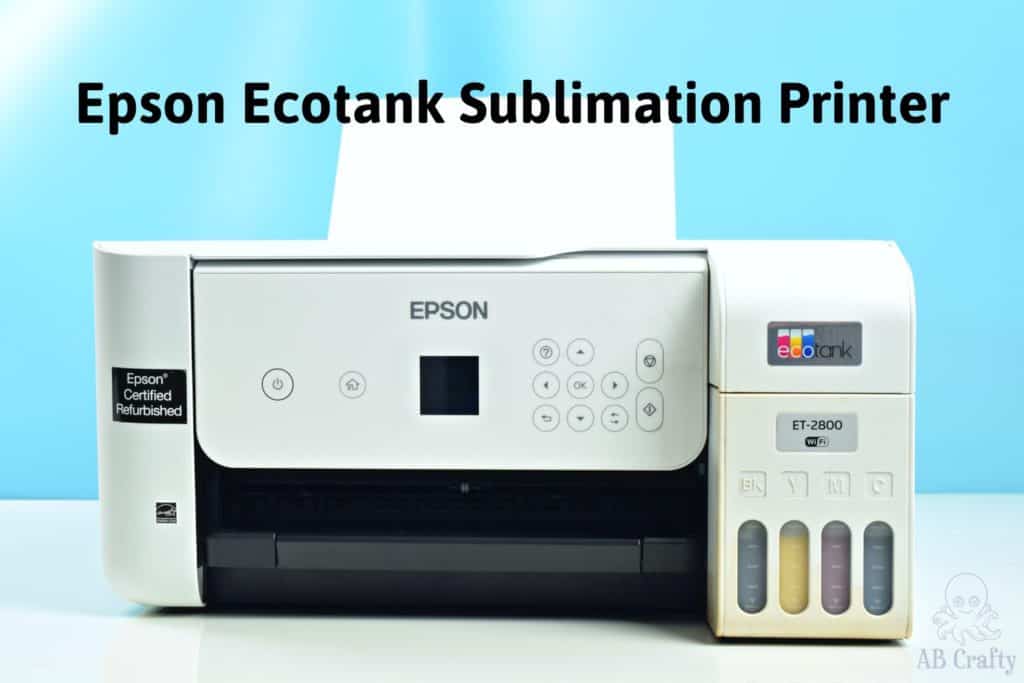
When I first converted an Epson EcoTank to a sublimation printer, I thought I’d found the ultimate hack. Years later, I’m still cleaning black ink off my floor and fighting with ‘overfill’ sensors that are designed to brick your machine. Converting a printer is a fantastic way to save hundreds of dollars, but it’s not a “set it and forget it” project. Between the messy bottle designs and the inevitable clogs if you let it sit, there’s a steep learning curve. In this guide, I’m sharing the “warts and all” reality of my conversion journey so you can avoid the mess I made.
Table of Contents
Note: Some links in this post may contain affiliate links, which means at no cost to you, I may earn a commission.

Why You Should Start With a Brand New Printer
I get asked all the time if you can just grab a used Epson EcoTank from Facebook Marketplace or a thrift store to save even more money. While I love a good bargain, I highly recommend starting with a brand new printer for your conversion.
The Contamination Risk
Sublimation ink and standard inkjet ink are completely different “animals.” If a printer has already been used with regular ink, there will be residue left in the internal lines and the print head. Even a tiny amount of old ink can contaminate your sublimation colors, leading to splotchy designs or, even worse, permanent clogs that you can’t fix.
The “Point of No Return”
The most important thing to remember is that once you put sublimation ink into a new Epson, there’s no going back. You’ve officially “converted” it, and it can’t be used for regular document printing ever again (unless you do these same conversion steps, but with regular ink). Because this is a one-way street, starting with a factory-clean machine gives you the best chance of success. You’re investing in a “blank slate” where the only thing in those lines will be the high-quality sublimation ink you chose.
A Note on the Warranty
Just a heads-up, the second you pour that third-party sublimation ink into your new Epson, you’ve likely voided the manufacturer’s warranty. This is why it’s so important to get the initial setup right. You’re becoming your own tech support, but the hundreds of dollars you’ll save on not buying a fancy sublimation printer makes that risk worth it for most crafters.
The Honest Truth: My Biggest Conversion Messes and How to Avoid Them
Most guides make converting a printer look like a five-minute craft project that’s always perfect. I’m here to tell you that if not done correctly, it’s messy, it’s frustrating, and sometimes it’s just plain stupid. Here are the four biggest issues I’ve run into over the years and what I’ve learned the hard way.
1. The Black Ink Disaster
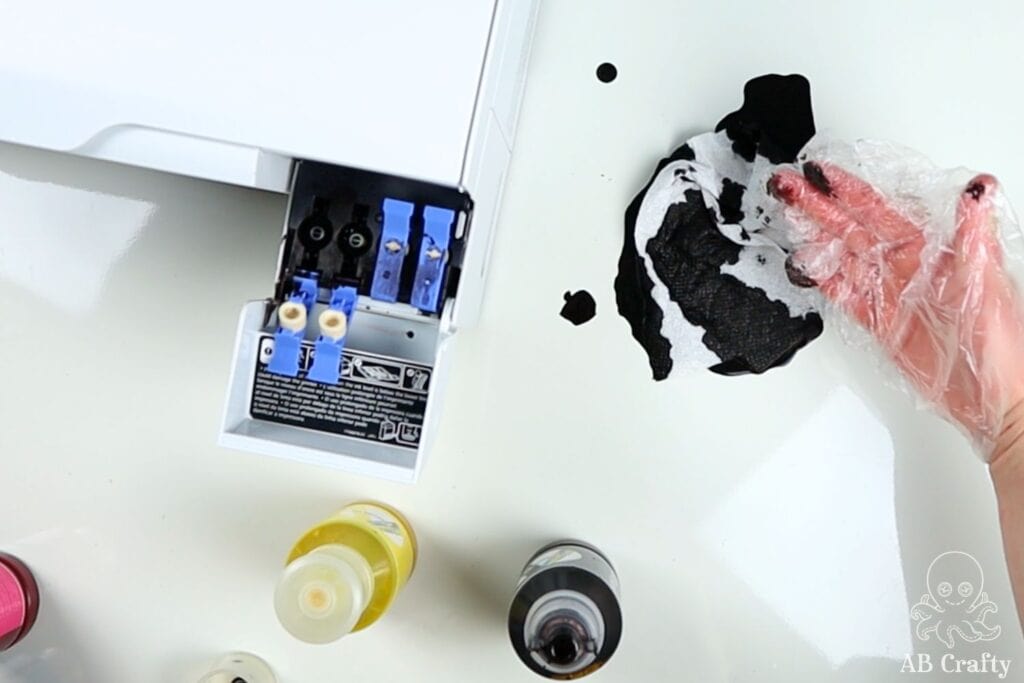
The first time I added black sublimation ink to my printer, it was a complete catastrophe. I was using those flip-top bottles that are supposed to “lock” into the machine. Instead of going into the tank, the black ink didn’t actually flow in, it just leaked everywhere. Since the other color tanks are also open during the fill, I almost contaminated every single container. Years later, that printer still leaks black ink from the bottom. It’s a mess I’m still living with, and it’s why I’m so careful about bottle designs now.
2. The 30-Day Clog
I once went an entire month without using my printer. When I finally tried to print, it was definitely clogged. Luckily, I was able to save it by running the standard printer cleaning and alignment tools through the printer’s own menu. It’s a good reminder that you’ve gotta keep the ink moving, kind of like how you shouldn’t let a car sit in the garage for months without starting it.
3. The “Total Flush” Nightmare
After letting the printer sit for several months, a standard cleaning wasn’t enough. It’s so clogged now that I’m going to have to do a full flushing of the lines to get it running again. If you’re going to convert a printer, you’ve got to commit to printing something, even just a tiny test page, every week or so. If you don’t, you’re looking at a massive headache down the road.
4. The “Overfill” Software Trap
Epson builds a “waste ink” sensor into their printers that will eventually brick the machine once it thinks the internal pads are full. I’ve actually taken my printer apart to remove and clean the filter thing myself, but the software still says it’s full and won’t work. It’s a frustrating design choice that’s basically meant to force you to buy a new printer. There are ways to hack the system and reset it, but you’ve gotta be prepared to play tech support when it happens.
Get the latest DIY tutorials, reviews, and crafting updates
You'll never be spammed and can unsubscribe at any time
Why an Epson EcoTank is the Best Choice (The Science)
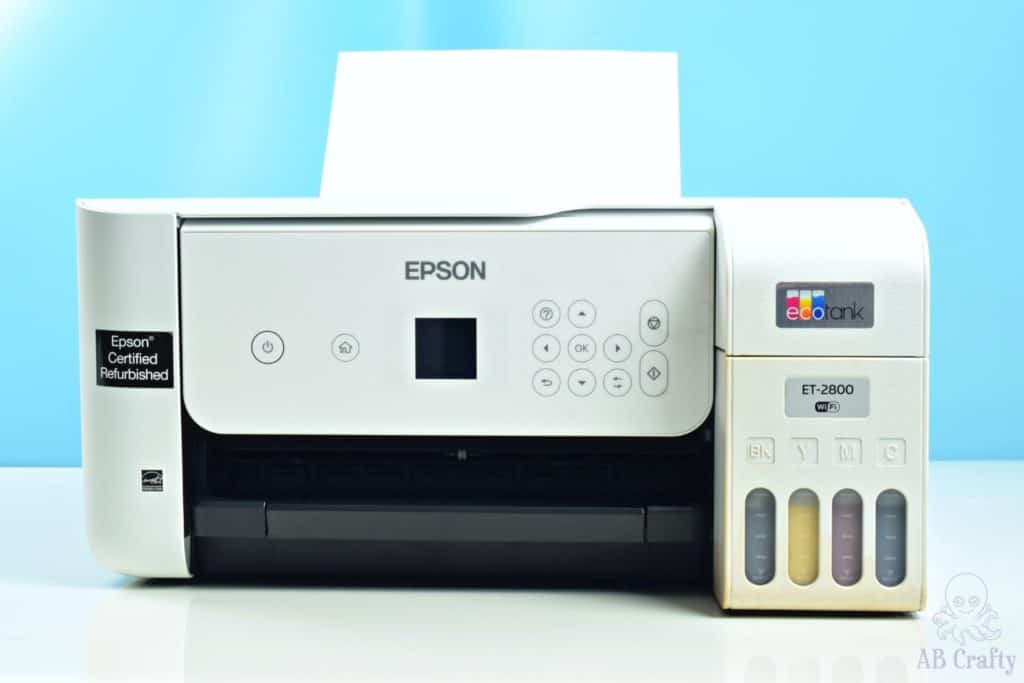
The advantage of an Epson Ecotank sublimation printer is it doesn’t use ink cartridges. You simply add the ink directly into the printer. This makes it easy to set up and refill as needed without having to worry about buying cartridges, filling them, and hoping the printer will scan the chips properly.
Furthermore, other printers (such as some HP or Canon printers) use heat to evaporate the ink through the printer lines. If you try to put sublimation ink through a heated print head, the ink will do it’s thing and vaporize and come back to dye whatever synthetic element it’s touching. It would effectively sublimate the printer’s lines.
Epson’s EcoTanks, on the other hand uses Piezo technology, which means it uses pressure instead of heat to push the ink out. Since the print head stays cool, the sublimation ink will flow through perfectly without gassing out early. Plus, because there aren’t cartridges and you’re just pouring ink into a tank, it’s the most cost-effective way to get into the hobby.
The other advantage of the Epson Ecotank printer is that it’s one of the cheaper printers and readily available (I got mine on eBay, but you can also get it from Amazon, for example).
Choosing Your Ink: Why the Bottle Design Matters
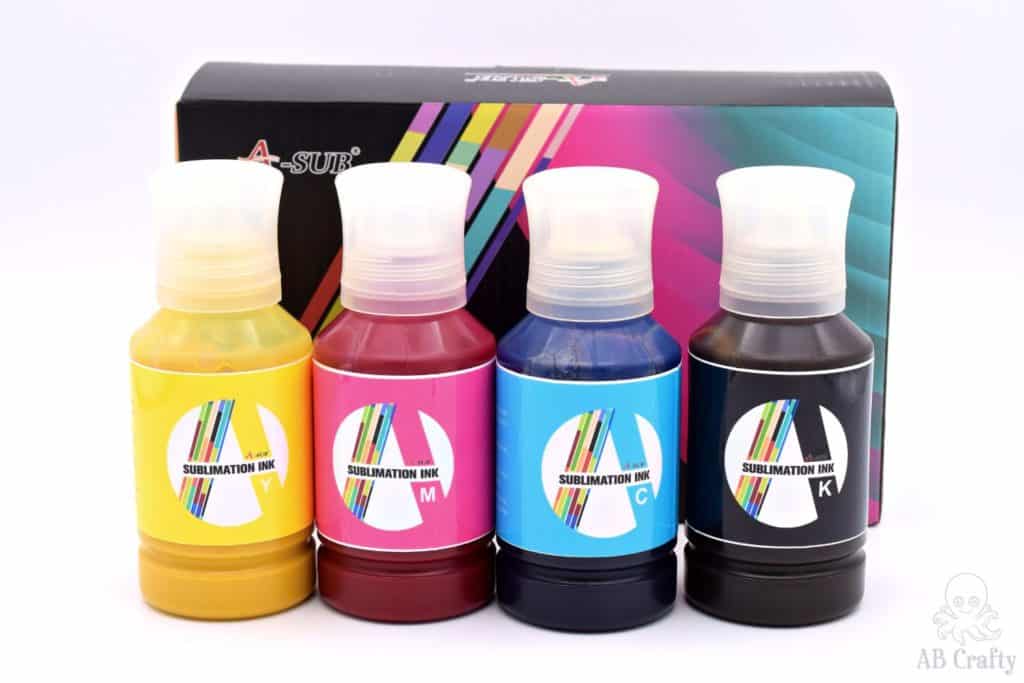
When you’re looking for sublimation ink, it’s easy to focus on the color quality or the price, but after years of cleaning up messes, I am telling you that the bottle design is just as important. Most “beginner” ink kits come with two types of tops, and choosing the wrong one can lead to a permanent black stain on your table (ask me how I know).
The Flip-and-Push Trap
A lot of the ink bottles you see online are designed to flip over and “lock” into the Epson ports. This is actually what I show in my original photos, but I have a major warning. The first time I used these, the black ink didn’t actually go into the tank, it leaked everywhere. To make it worse, the other color tanks were also open, so I almost contaminated the entire machine with black ink. Years later, that printer still leaks black ink from the bottom.
The Needle-Injection Method
If I were starting over today, I would only trust the bottles that use a needle to inject the ink. It might seem like more work, but it is so much cleaner. You have total control over where the ink goes, and there is almost zero risk of a “blowout” that ruins your desk or your other ink tanks.
The “Needle” Hack: If your favorite ink only comes in flip-top bottles, you can always use a separate syringe and needle to pull the ink out and inject it into the printer manually. It is an extra step, but it will save your floors.
My Top Recommendations:
I have a full post on the best sublimation inks, but here’s a short summary:

