I have been there. You mix red and blue expecting a vibrant, royal violet, but you end up with a muddy, brownish grey instead. It is incredibly frustrating because almost every tutorial online tells you the same basic rule without explaining why it fails in the real world.
As an ultimate crafter, I have spent hours in my studio mixing different pigments to find out why the “red and blue” rule is actually a bit of a lie. In this guide, I am going to break down the “Whistleblower” truth about color bias, why your red might be sabotaging your mix, and the exact pigments I use to get a perfect purple every time.
Table of Contents
Note: Some links in this post may contain affiliate links, which means at no cost to you, I may earn a commission.
What Two Colors Make Purple?
Blue and red make purple. This is the simple starting point for any project. Because these are primary colors, they are the foundation for every shade of purple I create in my Nashville studio. However, as an ultimate crafter, I have learned that simply having any red and blue on hand is not enough to guarantee a vibrant result. While these are the only two colors you need to get started, the specific pigments you choose are what determine if your purple stays bright or turns into mud.
Red
+
Blue
=
Purple
How to Easily Make Purple
When mixing the colors, I recommend you start with red and then gradually add blue to it. I have found that blue is often a much stronger pigment, so it is very easy to accidentally make your purple too dark if you start with the blue first. By adding the blue slowly, I can control exactly how deep the color gets until it is perfect.
It doesn’t matter what you are using, whether it is paint (including fabric paint), food coloring, or something else, the process is the same. The key is to take your time and mix thoroughly as you go.
Don’t forget to pin it so you can easily access it later!
Why Can't I Make Purple?
As long as you have mixed blue and red, you have technically made a purple. However, the real issue most people face is that there are many different kinds of purple, all created by what are called “undertones.”
In my Nashville studio, I look at these as warm and cool tones. Warm tones are your reds, yellows, and oranges, while cool tones are your blues and greens. It might sound funny, but you can actually have a “cool” red, which simply means it is a red that has blue undertones.
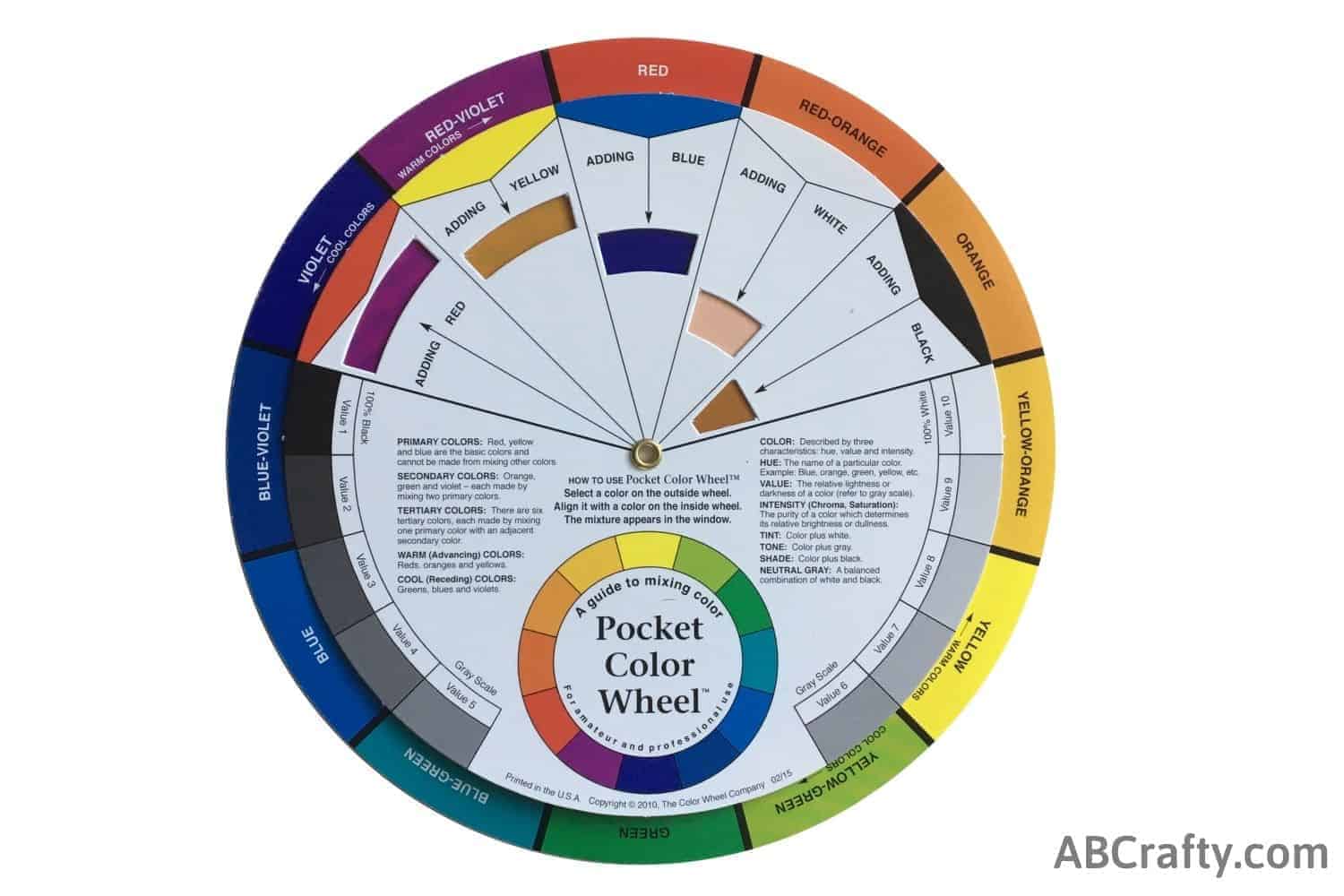
When I look at my nifty pocket color wheel, I can see exactly how these different tones of purple are made. For example, if I mix red with a blue-violet (which is a “warm” blue), the result ends up looking much more red. This happens because that “blue” already has red in it, so no matter how much of it you add, the final color will always stay on the redder side.
Ultimate Crafter Pro-Tip: You can click on the images below to make them larger and see these undertones in detail for yourself.
To get a “classic” version of purple, I look for a red with warm undertones and a blue with cool undertones. By doing this, the warm and cool tones are balanced so the final result is not too red or too blue.
For example, in order to get more of a blue purple color, mix a blue with cool undertones with a small amount of red with cool undertones.
How to Get Dark or Light Purple
When I want to change the value of my purple, I adjust my approach based on the medium I am using and the specific look I want to achieve. In my Nashville studio, I have found that a few simple techniques make all the difference.
How I Make Light Purple
To make a light purple or lavender, I always start with a base of white and slowly add my purple mixture into it. It is much easier to darken white paint than it is to lighten a dark purple. If you are using food coloring, you cannot use white, so I simply use a tiny drop of my purple mix in a large amount of whatever I am coloring to keep it pale.
How I Make Dark Purple
When I need a deeper, royal purple, I use black paint to get the exact shade I want. I have found that adding black is the most effective way to darken the mixture quickly. The key is to add it in very small increments. Because black is such a strong pigment, it can easily overpower the purple if you add too much at once. I like to mix it in slowly until I reach that rich, dark tone that is perfect for my project.
Ultimate Crafter Pro-Tip: If you want a deep purple that still feels very “bright” or vibrant, try adding a tiny bit of dark, cool blue instead of black. This deepens the color without “deadening” the saturation, which can sometimes happen when you use a lot of black paint.
What is Violet vs Purple?
As you can see on the color wheel, violet is the warmest possible “blue” you can get (click on the wheel to make it larger). In my Nashville studio, I look at these subtle differences to get the perfect result. This means violet is technically a purple because it has so much red undertone.
If you want to make violet, I suggest you mix a blue with a red that has a warm undertone. To make blue-violet, I use more reds and blues with more cool undertones. It is all about how those pigments play together on your palette to create the exact mood you want for your project.
What is the Opposite of Purple?
The short answer is yellow. When I look at the color wheel, the color directly opposite purple, also known as its complementary color, is yellow. That being said, depending on the cool and warm tones, I have found it could be a more cool or warm yellow.
You can click on the images to make them larger.
Frequently Asked Questions
Can I make purple with pink?
Yes! Since pink is essentially a light, cool red, it is actually one of the best colors to use if you want a vibrant, light purple or lavender.
What is the best blue for mixing purple?
Blues with a natural violet or cool undertone work the best. For example, ultramarine blue is a great option (here it is as an acrylic paint or as a watercolor).
Why is my purple too dark?
This usually happens if you start with blue. Remember, I always start with red and add blue in super small amounts to keep the color from becoming too deep too fast.
Final Thoughts
I hope this guide helps you avoid the muddy messes I used to struggle with in my early crafting days. Mixing the perfect purple is not just a science, it’s a skill that takes a little bit of patience and the right pigments.
Once you’ve mastered your mix, I would love to see what you create! Tag me on Instagram @ab.crafty or leave a comment below to tell me which red and blue combination worked best for your project.
How to Make Other Colors
Now that I have shown you how to master purple, I am working on guides for every color on the wheel. If you are looking to expand your palette even further, I have already broken down the secrets for other tricky mixtures.
You can check out my full guide on how to make brown to see how I easily make it.

How to Mix the Perfect Purple Every Time
Materials
- Red Paint (or food coloring)
- Blue Paint (or food coloring)
Equipment
- Paintbrush or Mixing Spoon
- Palette or Mixing Bowl
Instructions
- Start with the red pigment as the base.Red Paint (or food coloring)
- Mix in a small amount of blue until you reach your desired colorBlue Paint (or food coloring)


3 thoughts on “Why Your Purple Paint Looks Muddy: The “No-Mud” Specialist Guide”
which color does it mix with turquoise to make purple
This is such a helpful post! I never realized mixing red and blue could create such a vibrant purple. Can’t wait to try it out in my next art project! Thanks for sharing these tips!
I loved this post! Mixing colors can be so much fun, and I never knew how easy it was to create purple. The tips on using different shades were super helpful. Can�t wait to try it out in my next project!